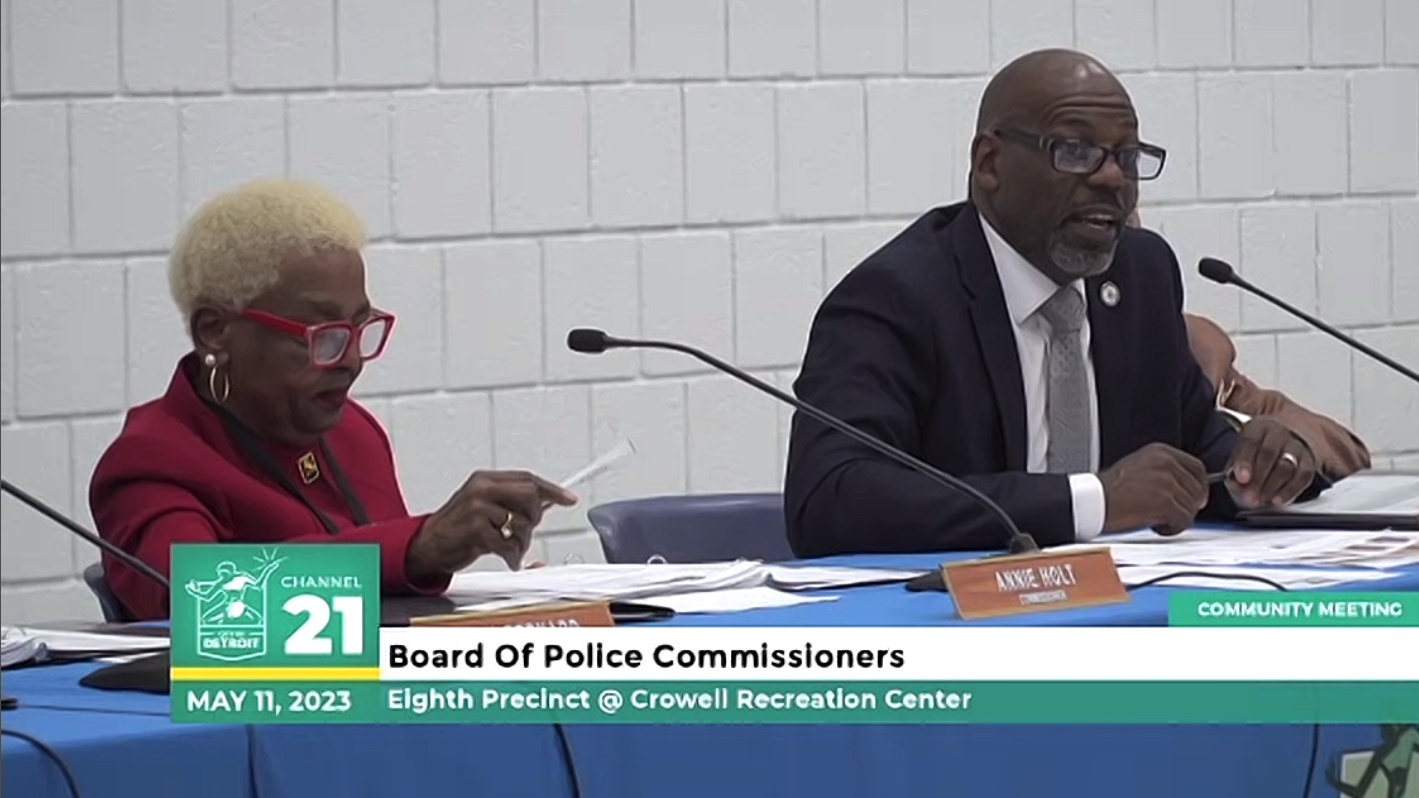
Detroit Board of Police Commissioners Community Meeting, May 11, 2023
A summary of this meeting will be added soon.
“We have given our police too much money and too much control, and if we want to cure our city of crime, we’ve got to look elsewhere.”
Table of Contents
This documentation is a work in progress. Information that has not yet been determined is enclosed in [brackets].
Documentation
The meeting was live-blogged on Mastodon and Twitter for Detroit Documenters, which offers its own report.
Documents available on Documenters.org, including the meeting agenda.
The agency’s last meeting on May 4 was documented by Amelia Benavides-Colón and Damien Benson. The next meeting on May 18 was documented by Alex Klaus and Zak K.
Visit the agency’s website for official information.
Related news articles
- “Detroit’s lawyer says City Council doesn’t need to follow surveillance law”
May 5, 2023, Malachi Barrett, BridgeDetroit
Materials
Archived pages
Mastodon posts and meeting page are archived on the Internet Archive Wayback Machine.
Audio
The actual start of the meeting (6:30 p.m.) can be heard at the start of the recording. This recording has not been altered.
Images
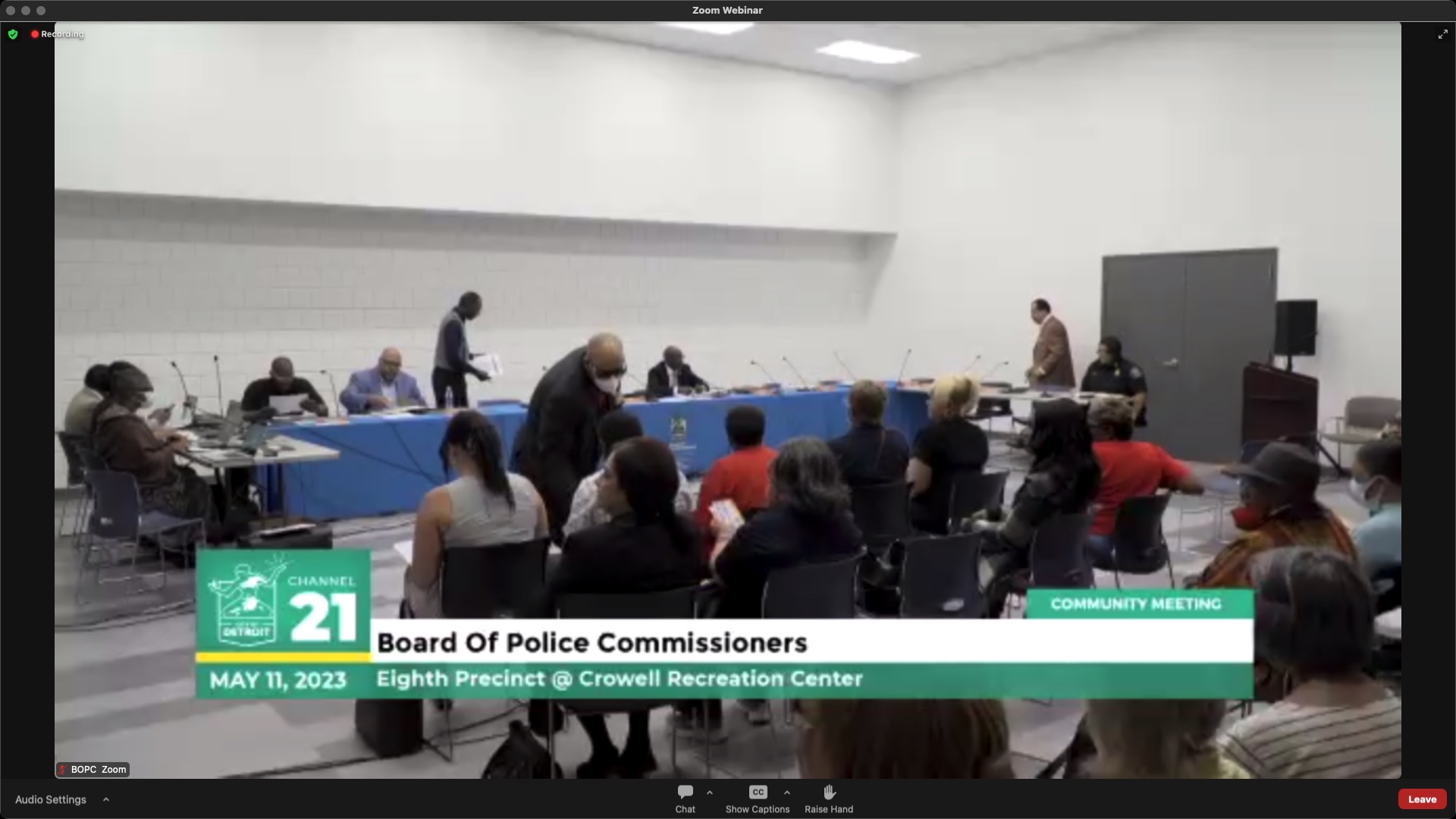
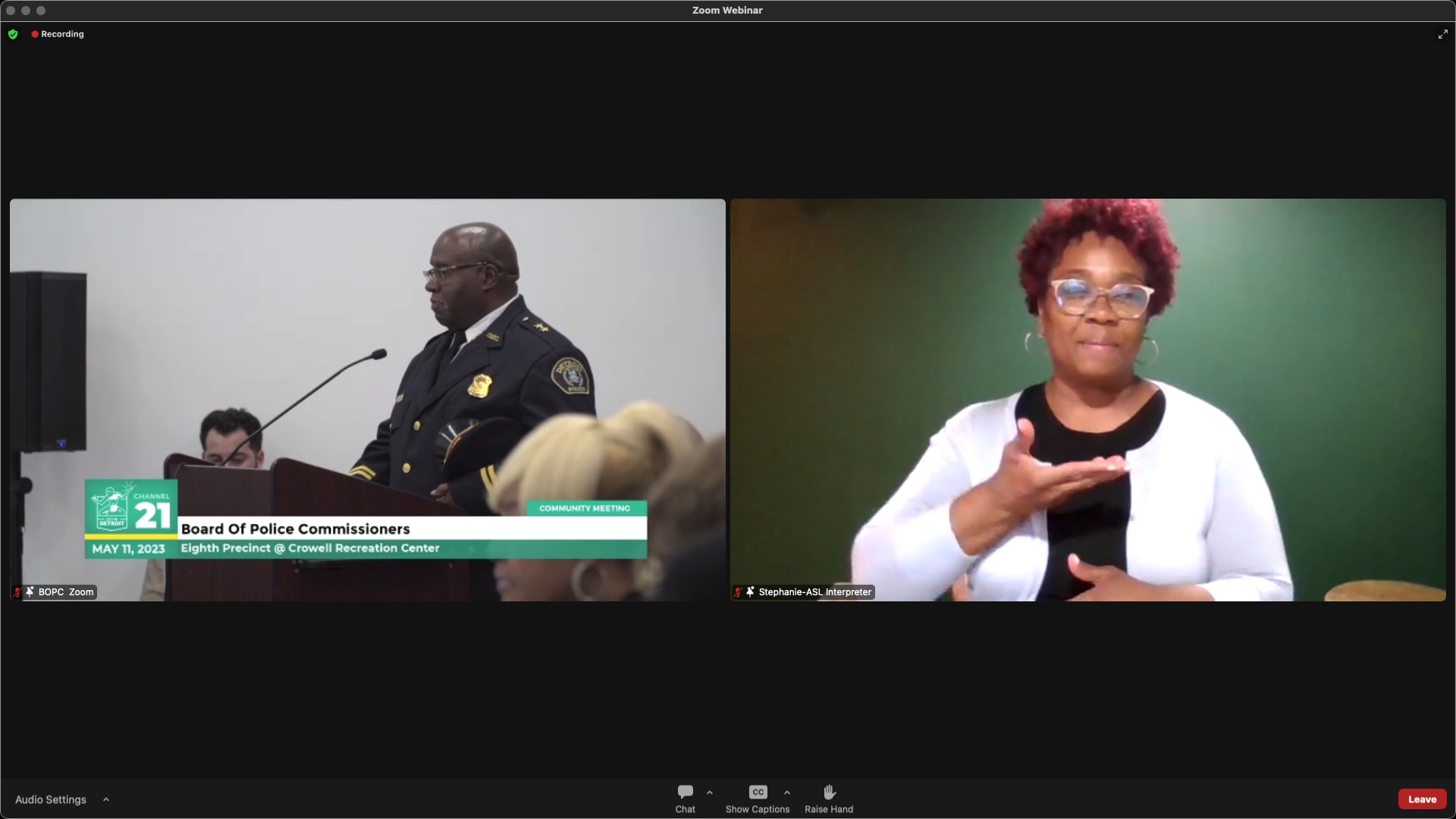
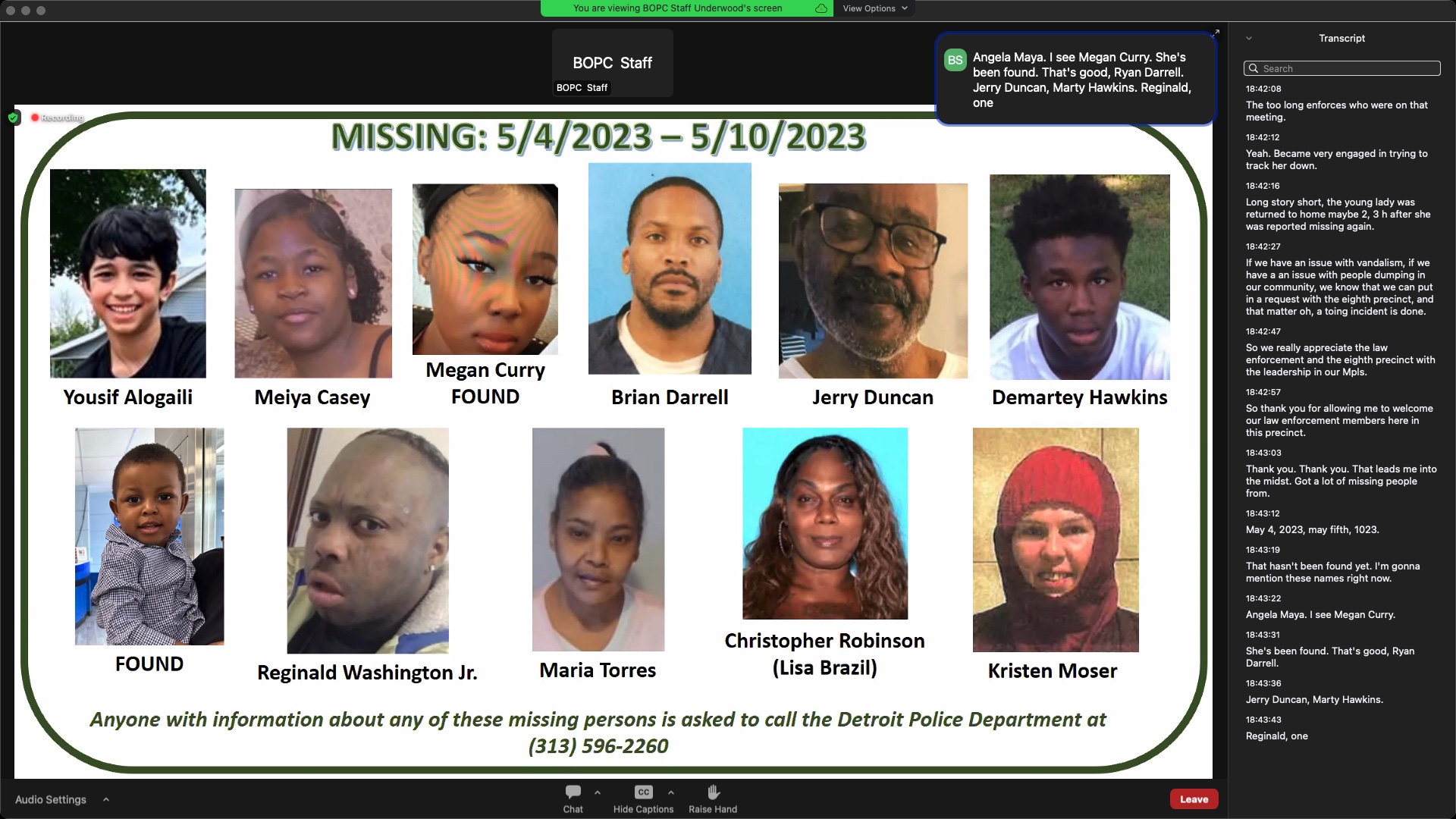
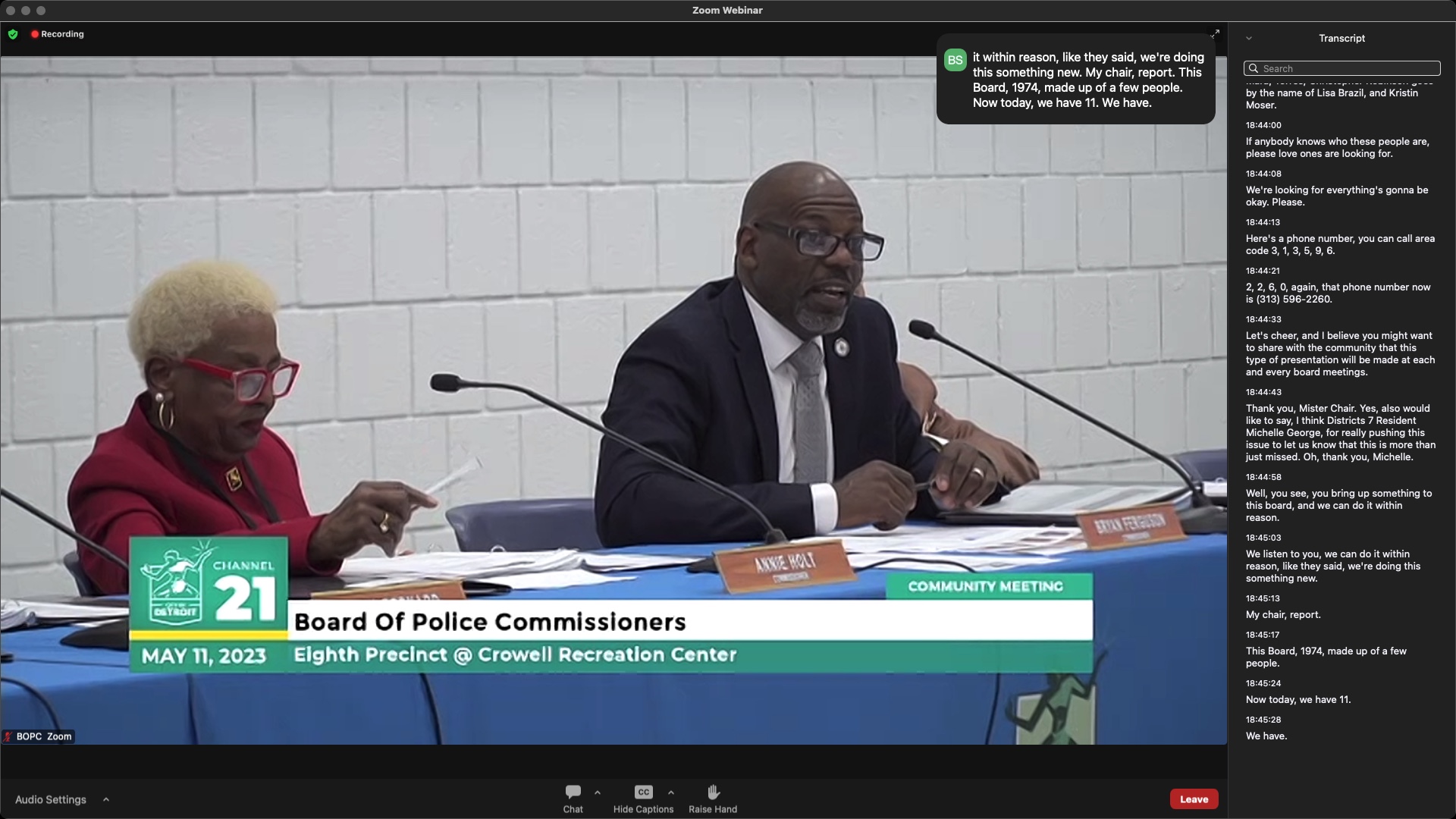
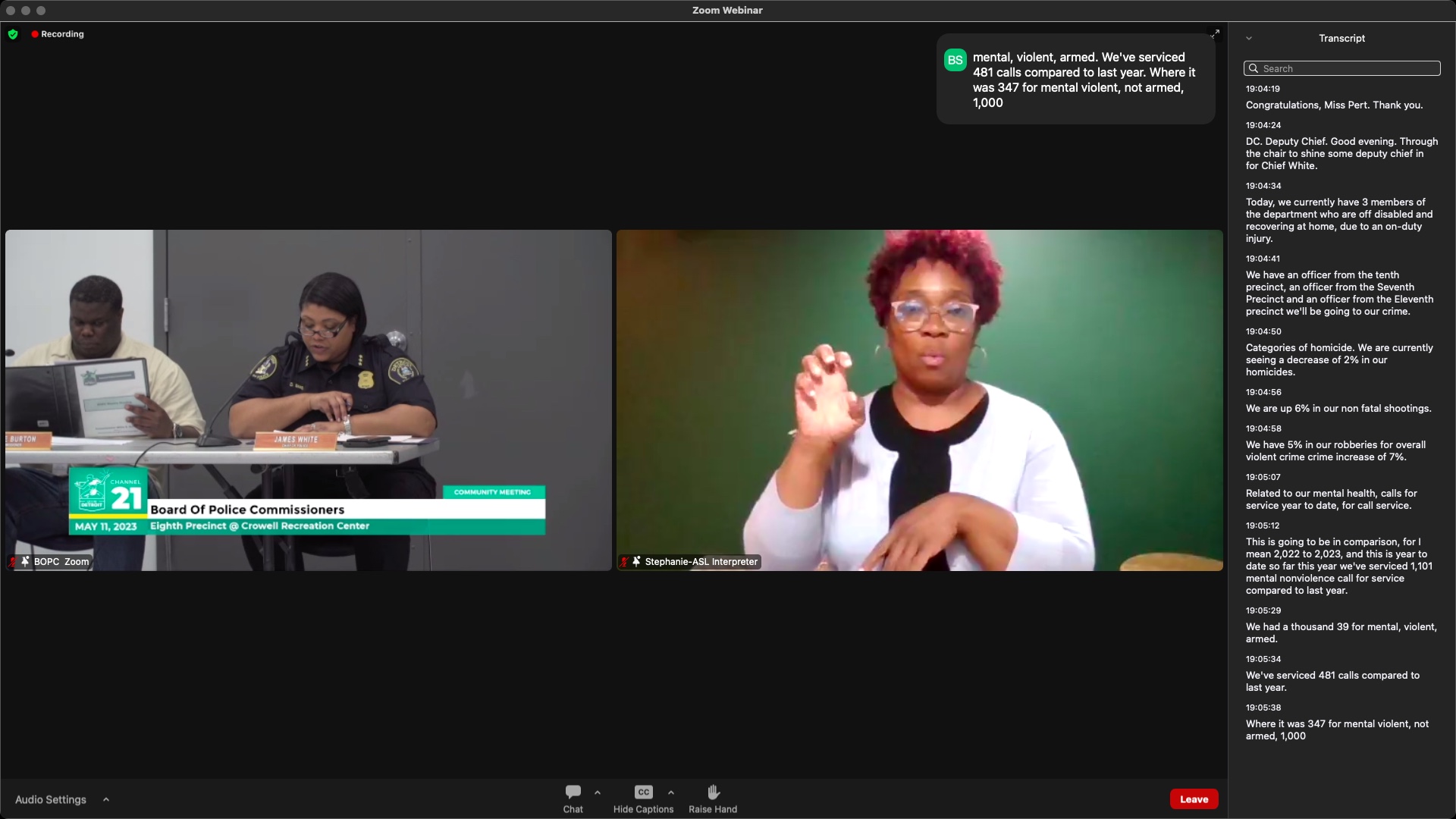
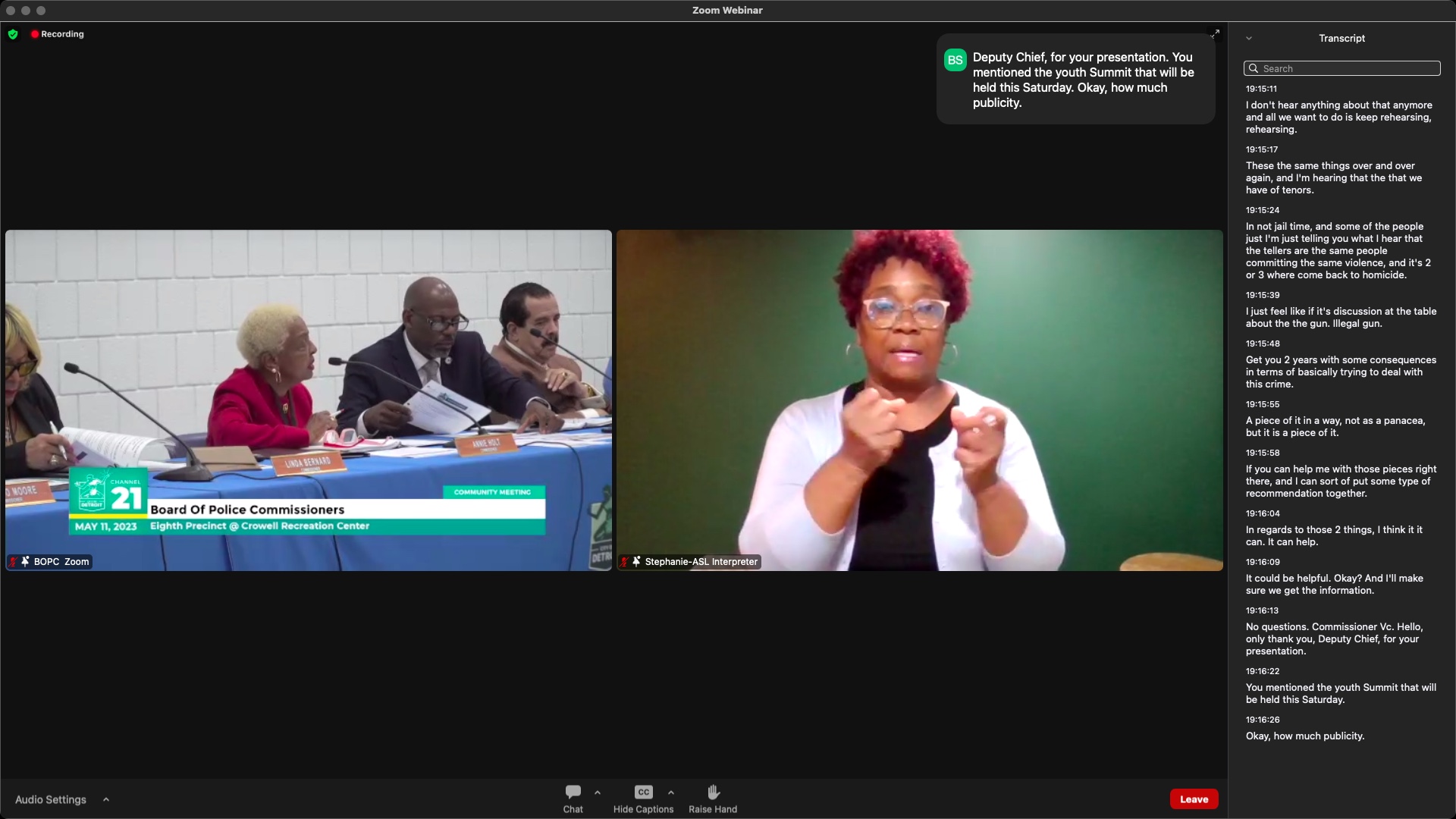
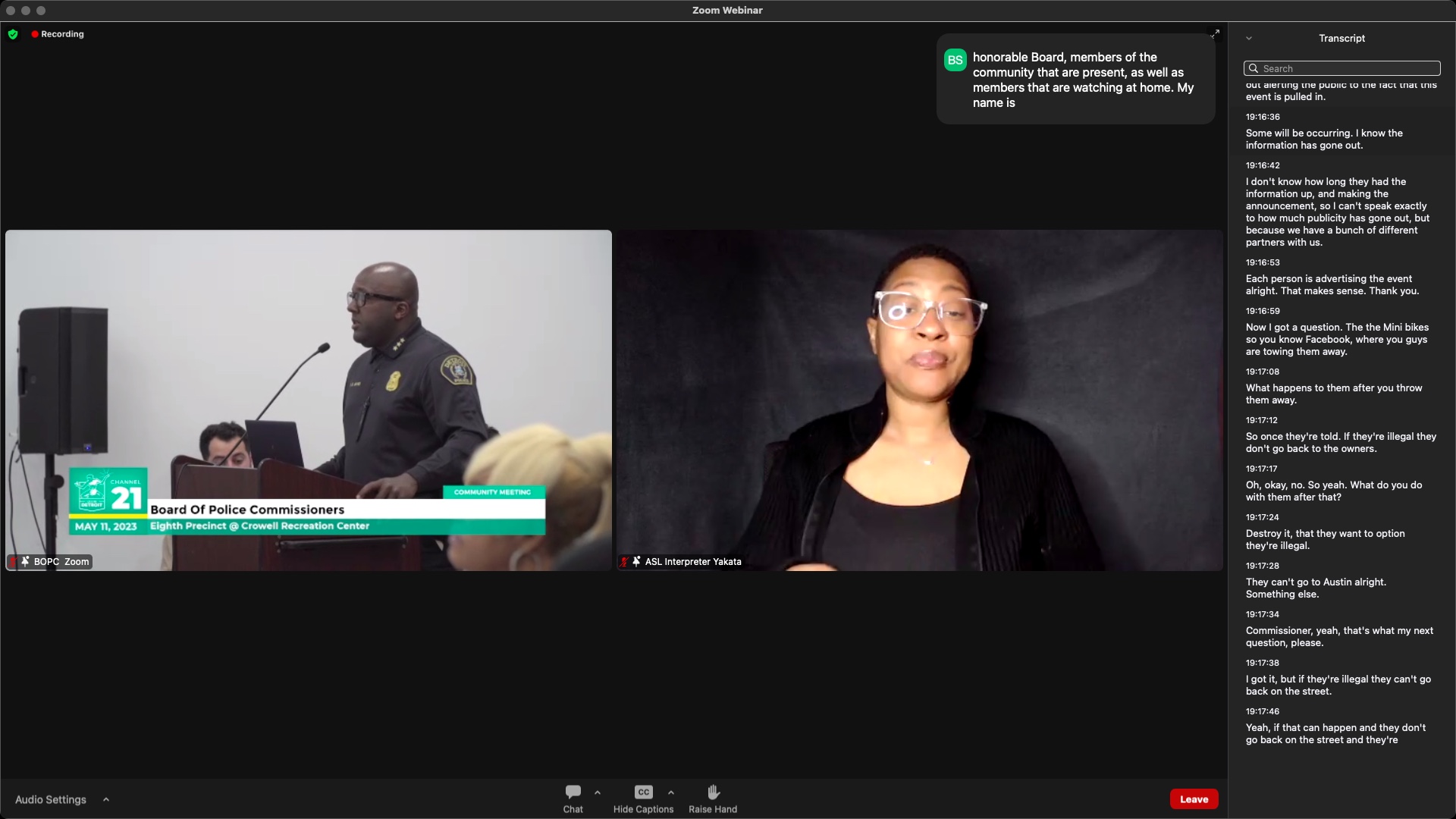
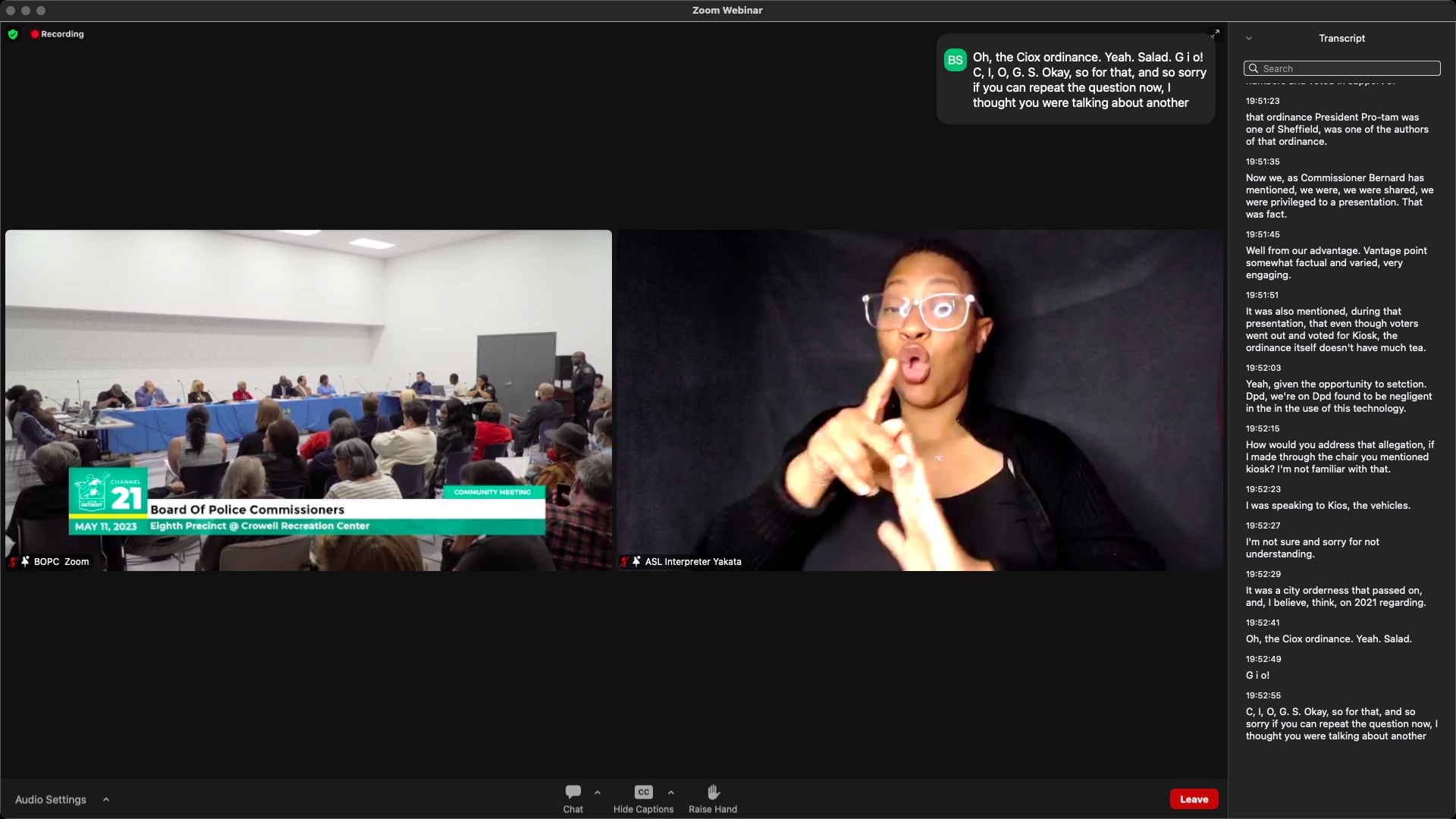
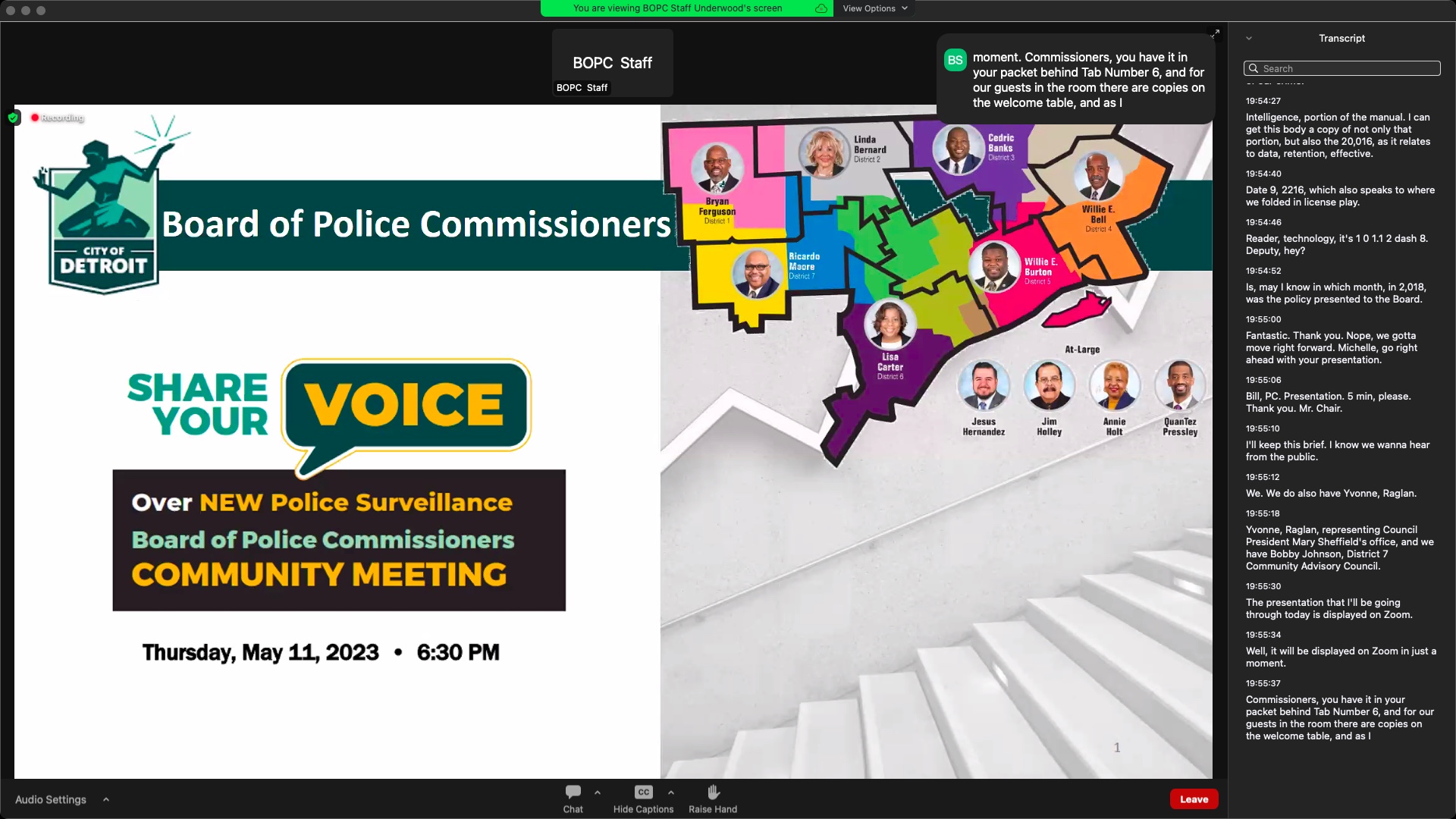
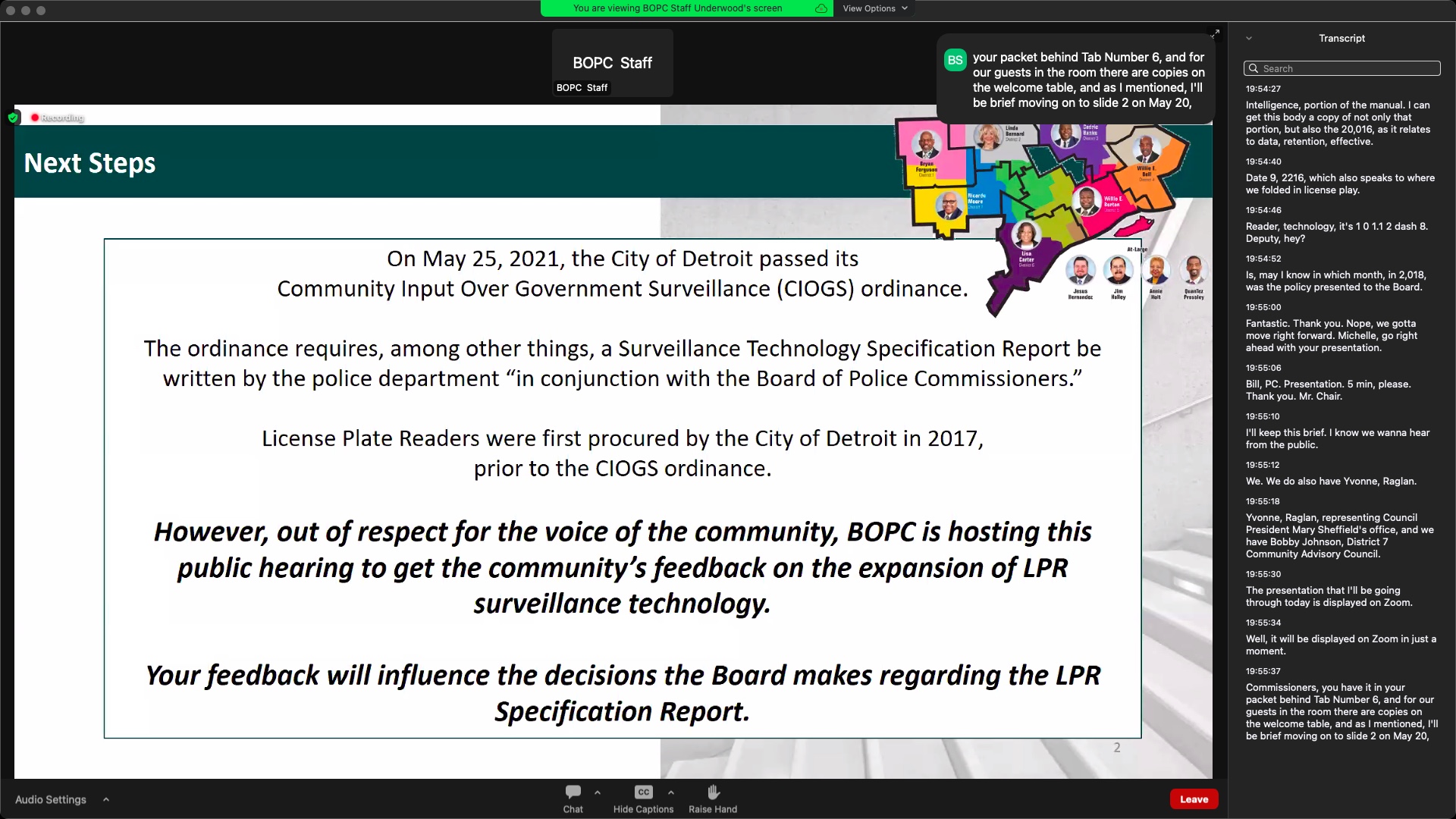
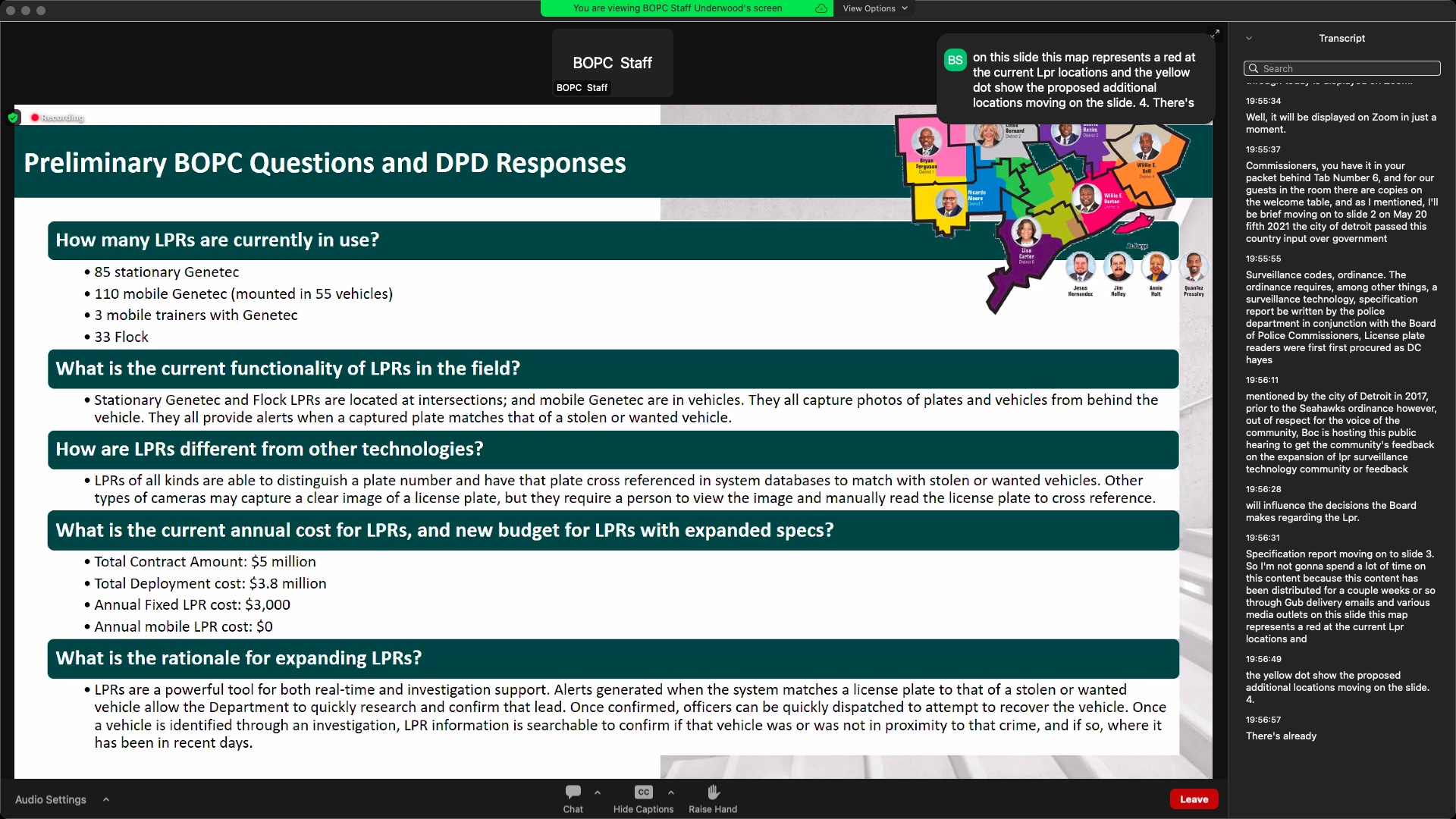
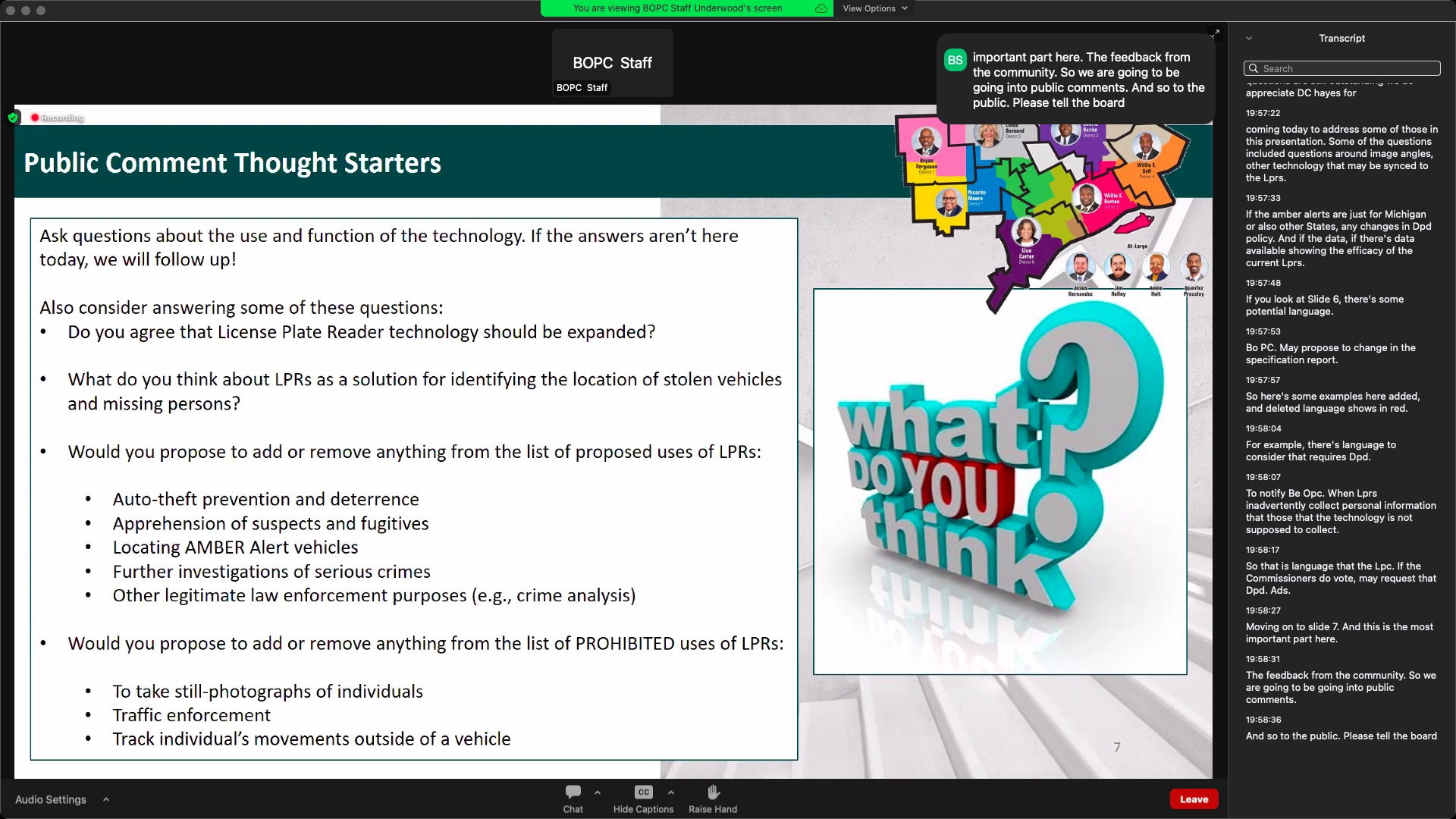
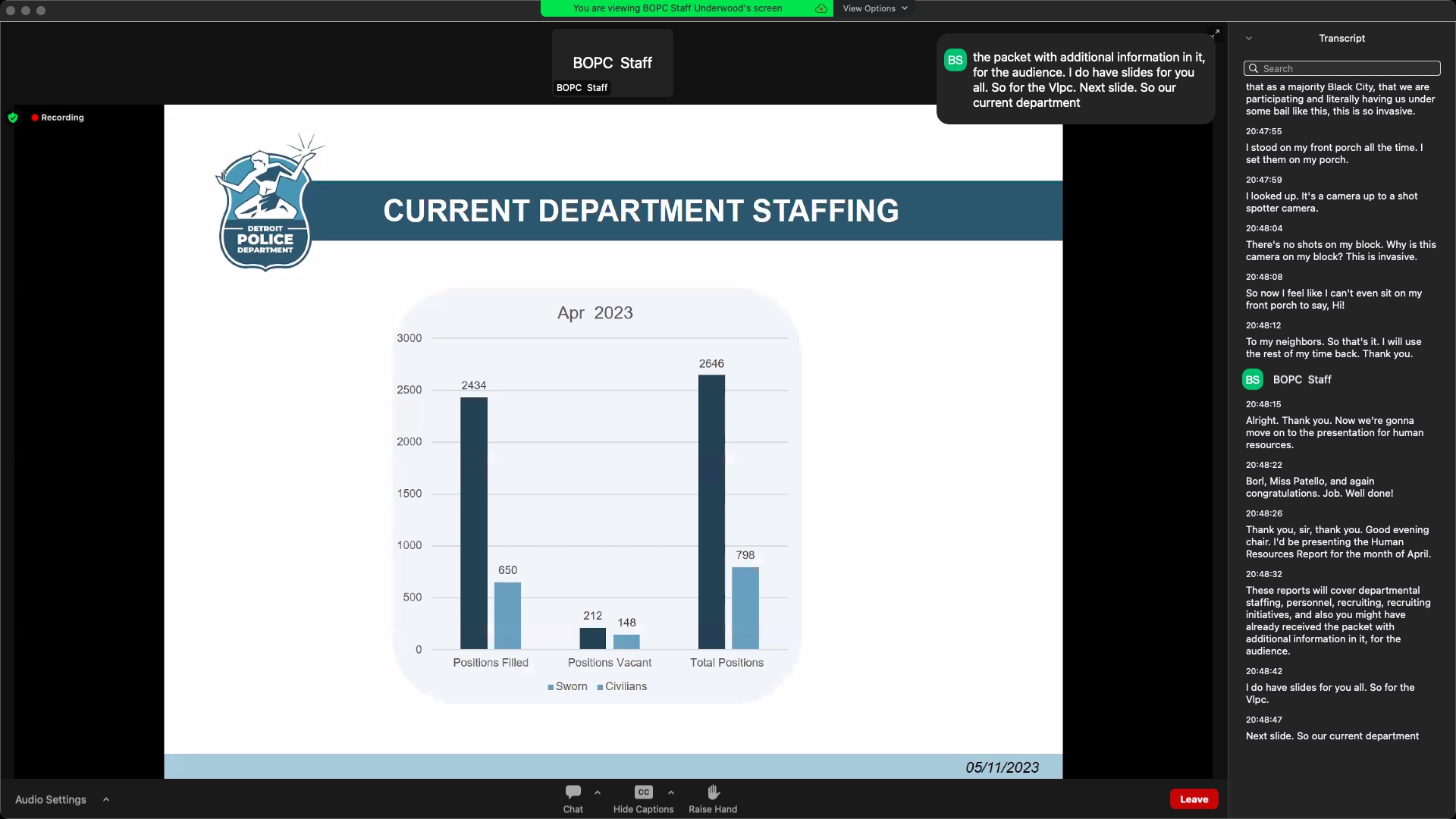
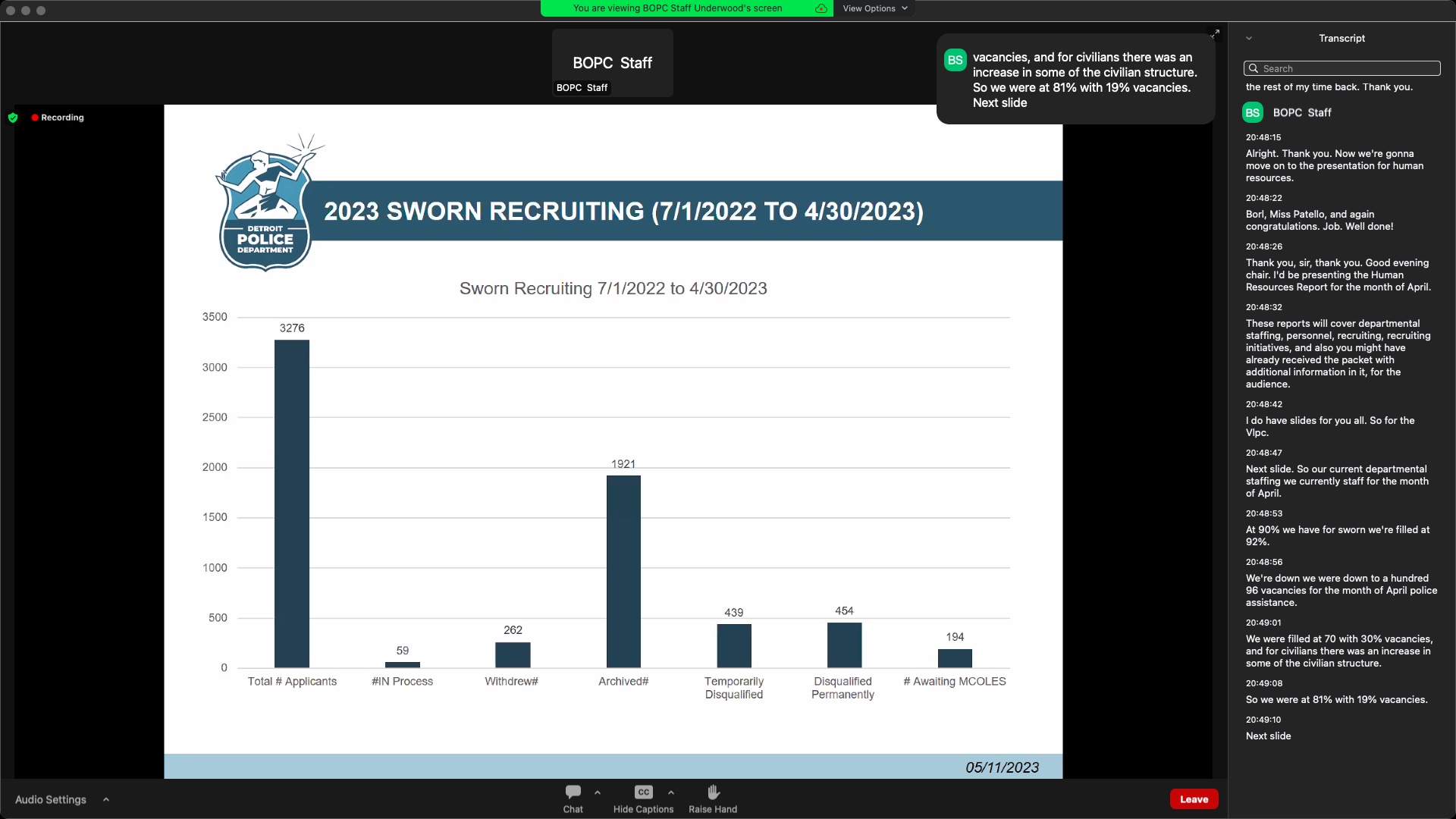
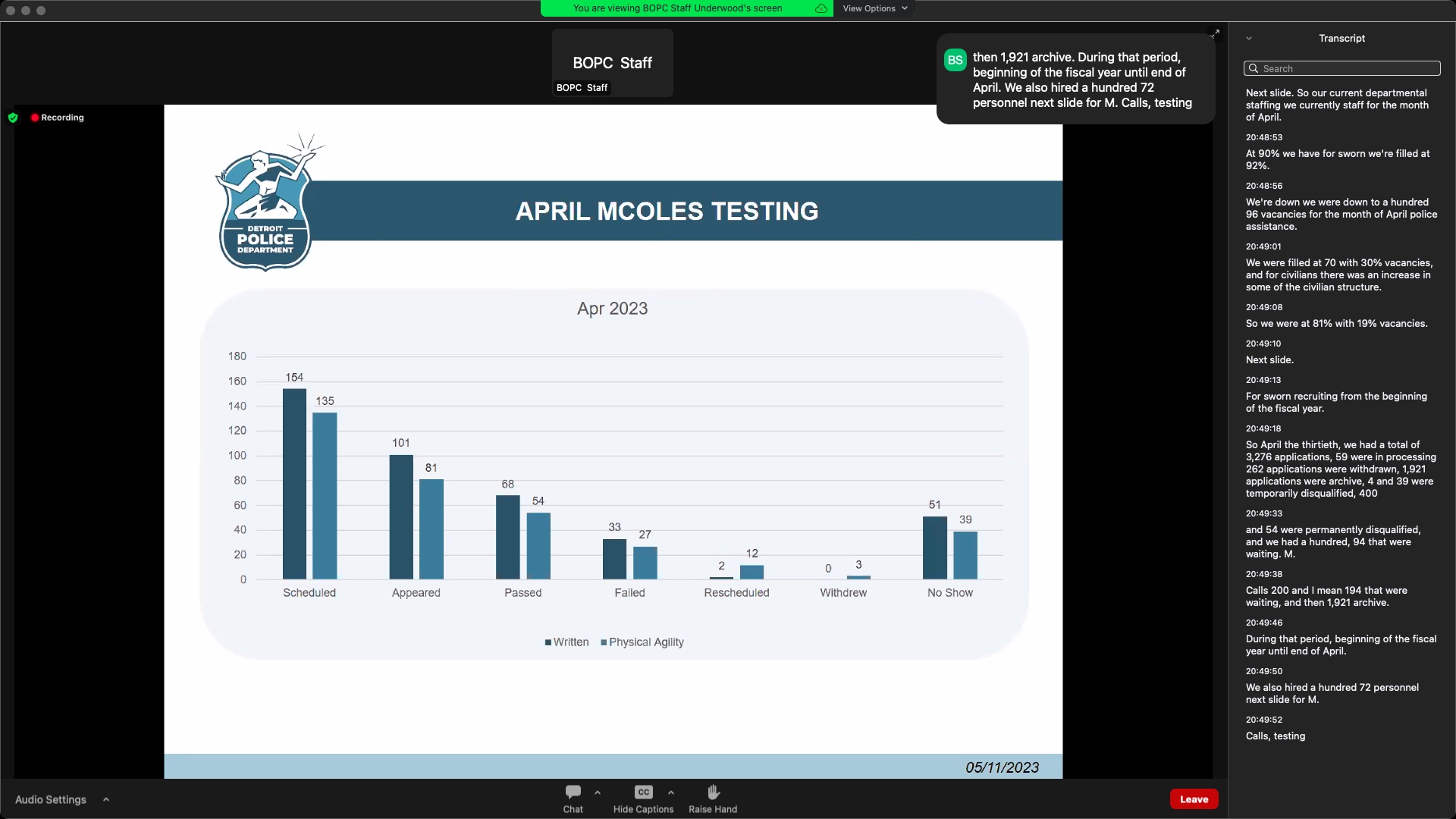
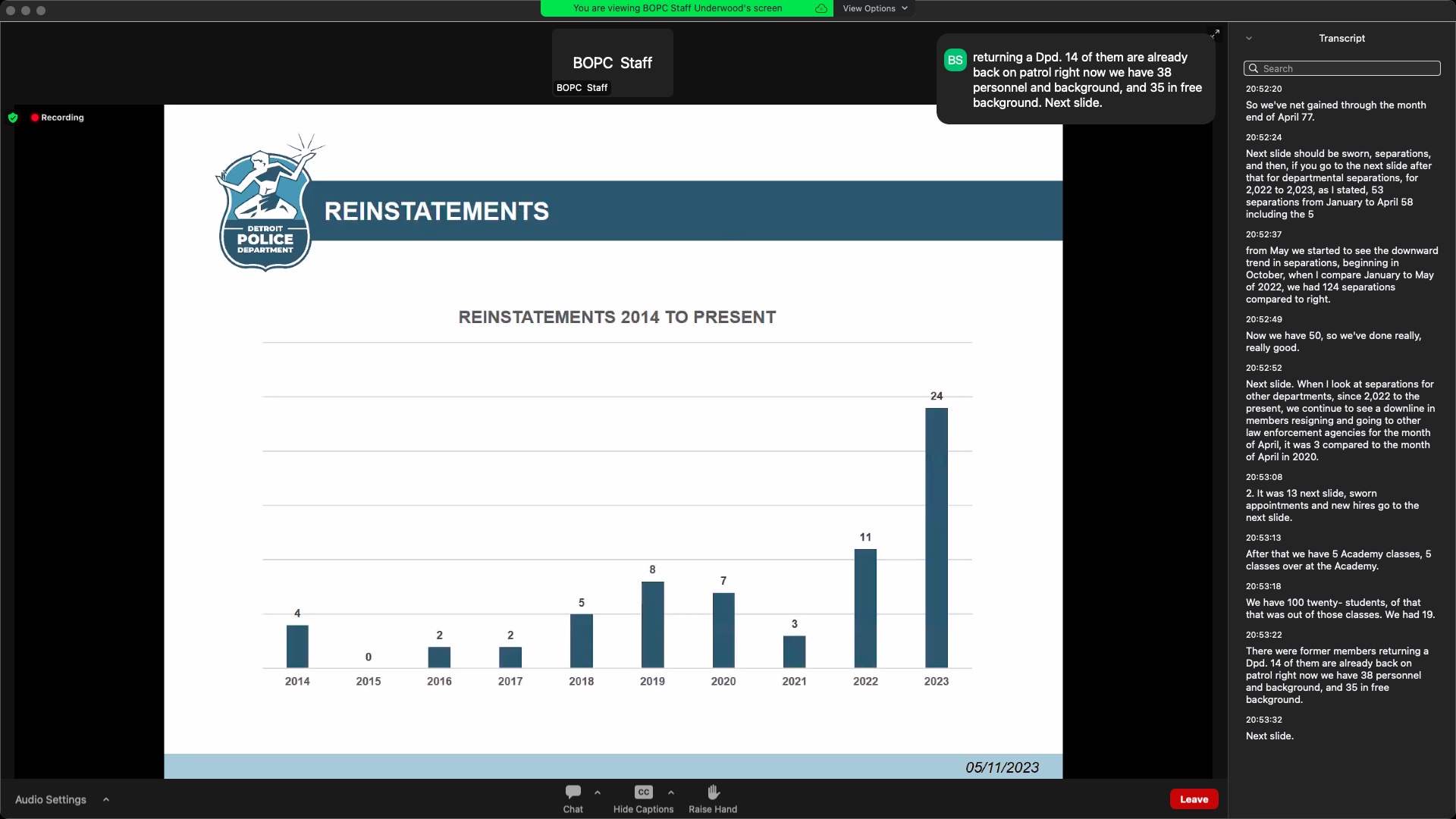
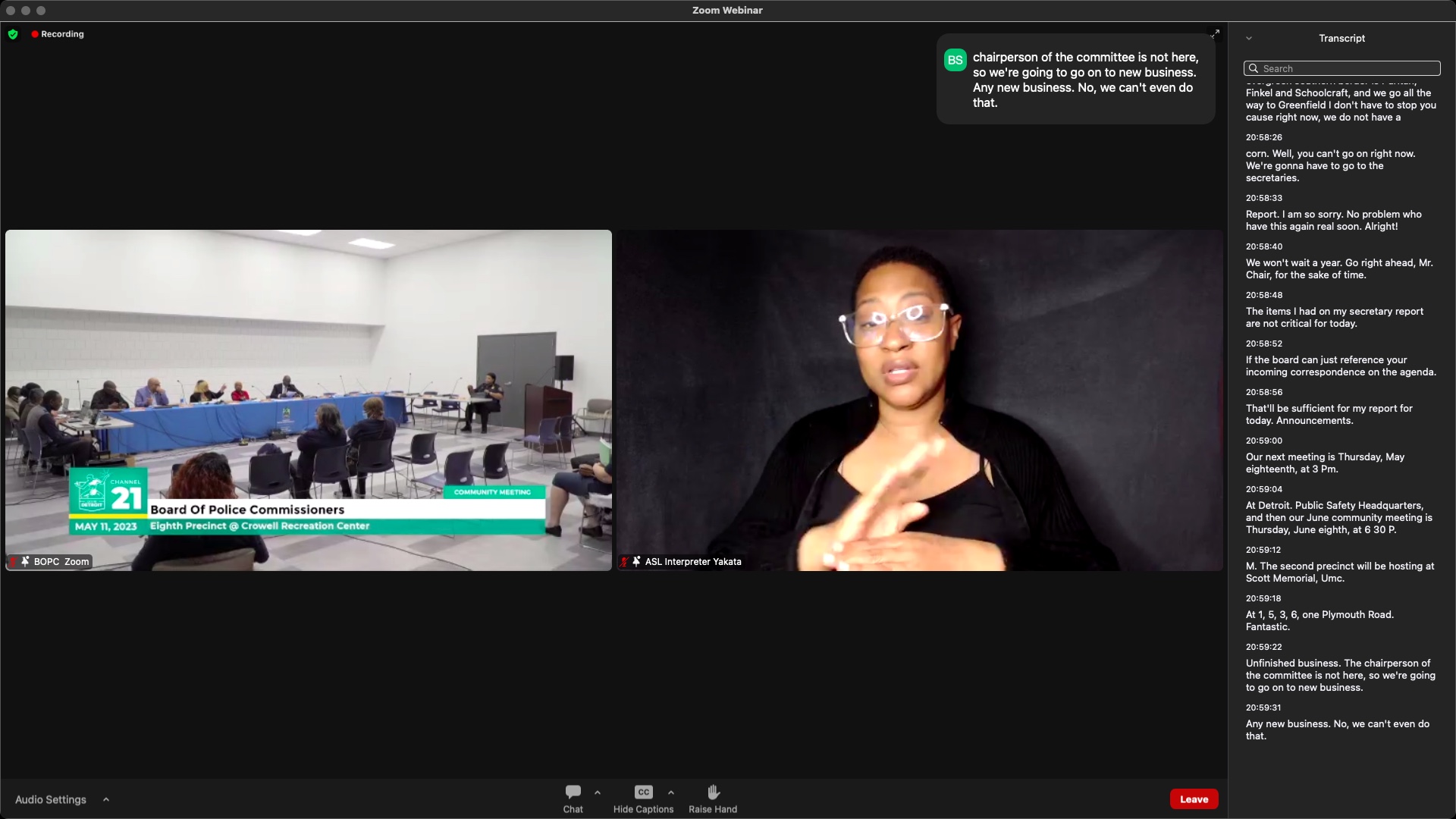
Screenshots of online meeting.





![Presentation slide titled, “Potential Specification Report Edits.” It shows six excerpts of a document and a note that says, “Note: Potential new language in red. Potential stricken language in red (strike).” In this alt text, “Potential new language” is in [brackets] and Potential stricken language is in {curly brackets}. First excerpt says: The proposed technology is intended to advance the following [constitutional] purposes: Auto-theft prevention and deterrence: Apprehension of suspects and fugitives; Locating AMBER Alert vehicles; Furthering investigations of serious crimes: and Other legitimate law enforcement purposes (e.g. crime analysis).” Second excerpt: “The following uses of the technology are expressly prohibited: [To take photographs of personal property;] To take still-photographs of individuals; Traffic enforcement; or Track an individual's movements outside of a vehicle.” Third excerpt: “The proposed contract provides that the City of Detroit / Police Department owns all of the data collected. [DPD will audit data every 15 days to check for protected information collected by the technology.] In the event protected information is collected, the Police Department will cause for its deletion [within 30 days]. [Upon identifying that protected information has been collected, DPD will report the following to the Board of Police Commissioners within 15 days: Type of information collected; Date range of collection; Extent of impact (i.e. how many person’s informiation was collected); DPD members who had access to the information; Date and method of destruction.]” Fourth excerpt: “The Police Department's policies and procedures allow for the retention of LPR information for up to one year. However, any hits or reads that were not used in a criminal investigation will be automatically deleted by the system after 30 days for Flock cameras, and 90 days for both Motorola Vigilant, and Genetec cameras. If the Police Department preserves LPR information for use in an investigation, it will fall under the retention and destruction requirements for case files and not under the retention requirements for LPR information. [This is a DPD only policy and is in compliance with Michigan State Law/MCOLES.]” Fifth excerpt: “The Police Department has entered into Data Sharing Agreements with a number of law enforcement agencies. Under no circumstances are members of the department [or other law enforcement agencies within a sharing agreement] authorized to share information for the purpose of assessing immigration status or enforcing immigration laws.” Sixth excerpt: “Data Retention: Insofar as the privacy of the public can be storage of mass surveillance data, what rules and procedures will cover the retention of surveillance data, including those governing: (a) The limited time period, [up to one year] {if any}, surveillance data will be retained. Such information shall include a statement explaining why the designated retention period is no greater than that which is absolutely necessary to achieve the specific purpose(s) enumerated in the Surveillance Technology Specification Report;”](https://civicdetroitdan.dignacio.org/media/posts/43/gallery/2023-05-11-board-of-police-commissioners-evening-community-meeting-6383-detroit-documenters-civicDetroitDan-screenshot-of-online-meeting-AA-19-57-56.jpg)







Meta
Page published July 10, 2023.
Share freely
All original content in this documentation is licensed under a Creative Commons Attribution 4.0 International License. Share and republish to everyone, freely.